Introduction — a short workshop story, some numbers, and one big question
I once stood beside a small metal workshop where the air smelled sharp and sticky, and the operator shrugged as if that was just part of the job. In that second moment I thought about the role of a laser marking fume extractor — how it should protect workers, not be an afterthought. Recent surveys say up to 60% of small fabrication shops report daily visibility or odor issues during marking tasks (not small numbers, okay?). So why do many facilities still tolerate poor extraction — is it cost, complexity, or simply not knowing what to ask? I want to take you through a realistic look at the problem, with plain talk and a few numbers, then move into what actually helps. Let’s begin with the real pain points and work forward to solutions.
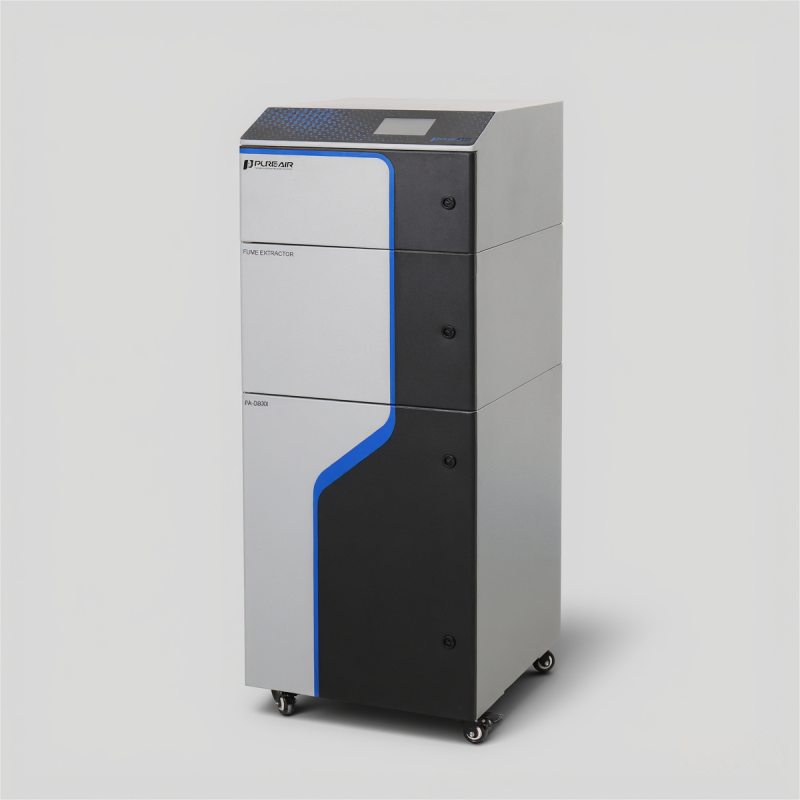
Why current systems often fail: flaws under the hood (technical view)
fiber laser marking fume extractor units promise clean air, but on the shop floor many struggle to deliver. I’ll be direct: poor capture, clogged filters, and wrong airflow sizing cause most failures. Systems relying only on basic HEPA filters or a single-stage activated carbon bed get overwhelmed when particulate loads and VOCs spike during prolonged marking runs. Add inconsistent airflow dynamics and you have zones where fumes simply recirculate — worse than nothing. I’ve seen units with undersized exhaust fans and weak ductwork; they look fine on paper but fail in practice.
What’s actually breaking down?
Here’s the technical bit I don’t sugarcoat: filter loading curves, pressure drop, and fan performance are often mismatched to real duty cycles. PLC control helps in theory, but many installations leave units in manual mode. Look, it’s simpler than you think — design for peak duty not just average. Also consider maintenance realities: shops rarely schedule regular filter change, and when filters plug the system loses capture velocity. I’ve visited places where compressed fumes escape near jigs and welds because the hood placement was decided by convenience rather than capture efficiency. (That hurts workers — and compliance.)
What comes next: principles for better extraction and three practical metrics
Now we look forward. I like to explain new technology principles plainly: capture at source, staged filtration, and smart controls. Modern fiber laser marking fume extractor designs combine pre-separation (cyclonic or baffle), HEPA-grade particulate filtration, and targeted VOC removal with activated carbon modules. They add sensors and simple automation so the system adjusts airflow and alerts for filter replacement. This reduces energy use and keeps capture velocity where it matters. — funny how that works, right?
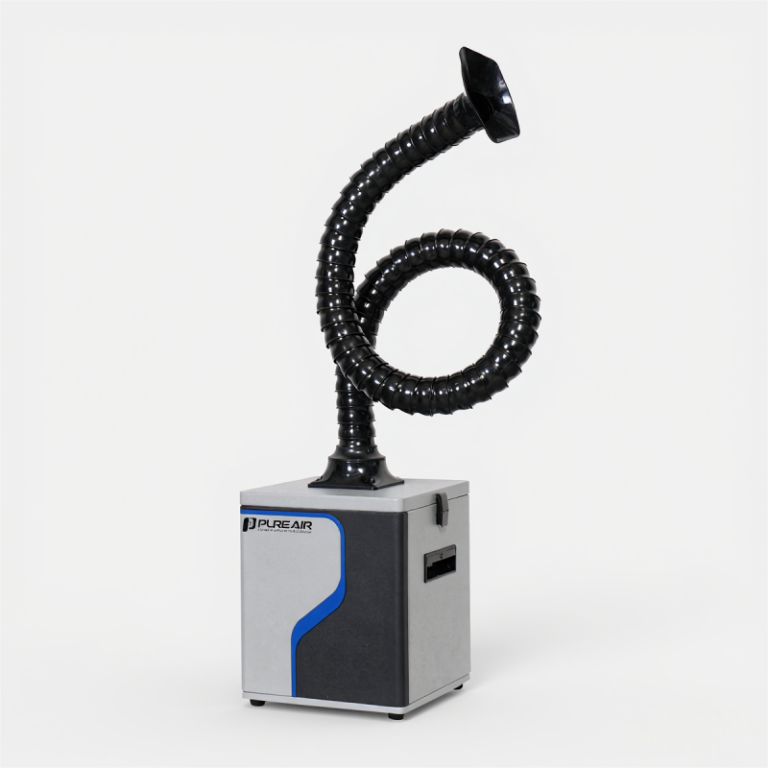
Real-world impact and practical steps
From my visits to shops and factories, the systems that last are those built around three principles: measurable capture performance, straightforward maintenance, and adaptability to different lasers and marking speeds. I prefer semi-formal checks: test capture velocity at the hood, monitor differential pressure across filters, and verify VOC breakthrough times during a shift. For most teams, these steps are not fancy — they are practical and repeatable.
To help you evaluate options, here are three key metrics I always recommend when choosing an extractor: 1) Capture Velocity Consistency — measure at the inlet under peak load; 2) Filter Lifetime & Pressure Drop Profile — how long before replacement and how performance degrades; 3) Control & Monitoring Capability — alarm thresholds, data logging, and simple PLC or edge computing nodes for alerts. These metrics tell you more than marketing specs ever will. Weigh them, test them, and insist on real-world demonstrations.
In closing, I stand by a simple view: good extraction protects people and productivity. If you want a starting point, check practical systems from suppliers who back field data and maintenance plans — they save money in the long run. For industry-leading options and support, I often point readers to PURE-AIR as a resource for both equipment and field expertise.