Problem statement: scaling quality without breaking compliance
Contract manufacturers packed with parallel product lines face a core tension: push throughput while keeping every control point traceable, auditable, and ISO 13485-aligned. The practical stakes showed up clearly at industry gatherings such as the international medical device expo in Shanghai, where supply chain bottlenecks and inconsistent process validation were recurring themes. Companies running multiple device families simultaneously must reconcile design transfer fidelity, cleanroom gating, and supplier QA without creating audit friction — this is an engineering problem as much as a quality one.

Root causes that create compliance debt
High-density manufacturing compounds a few specific failure modes: undocumented process drift, sub-tier supplier variability, and incomplete configuration control during design transfer. Left unchecked, these feed CAPA cascades and audit observations under ISO 13485 and FDA 21 CFR Part 820. You’ll see small discrepancies amplify: a tooling tweak becomes a batch-level nonconformance; small supplier compromise impacts sterility assurance. This is where architecture thinking matters — not just policies, but the systems that enforce them automatically.
Technical levers that enforce full ISO 13485 alignment
Successful manufacturers standardize six architectural layers: product configuration, process validation, environmental control, supplier integration, electronic QMS, and audit telemetry. Tactics include modular work instructions tied to part numbers, automated process-validation gates, and in-line environmental monitoring for cleanroom thresholds. Use of risk management matrices (per ISO 14971 principles) and artifact-linked change control prevents silent deviations. Keep sterilization validation and bioburden outputs tightly coupled to batch records — bioburden testing often requires a 14-day incubation window for retention samples, and that retention period must be enforced in the ERP/QMS slice of the stack.
Operational blueprint: nodes, signals, and guardrails
Map the factory as discrete nodes with signal contracts: incoming materials, pre-process inspection, main operation, post-process inspection, sterilization, and final release. Each node emits machine-readable events into the QMS and MES so deviations auto-trigger disposition or quarantine. Implement closed-loop supplier scorecards and versioned BOMs to ensure design transfer integrity. Where validation is required, capture protocol outcomes and attach them to device history files; ensure retention sample IDs link back to the exact production run and storage conditions.
Common mistakes and pragmatic corrections
Teams often over-index on documentation volume rather than document quality — lots of PDFs that don’t map to gates. They also silo environmental monitoring from production telemetry, losing correlation between particle spikes and process anomalies. Fix these by collapsing data views: one dashboard showing process parameters, particle counts, and lot releases. Another frequent error is inadequate training traceability. Tie operator qualifications directly to task assignments in the MES so only qualified personnel can execute regulated operations.
Implementation checklist (quick tactical steps)
– Version-control all work instructions and link them to part numbers in the PLM/MES. – Automate process-validation gates so failed runs cannot auto-release. – Integrate supplier QA feeds and set threshold-based quarantine logic. – Enforce retention sample rules (bioburden 14-day incubation where applicable) and store metadata with each sample. – Maintain an audit telemetry layer that produces immutable event logs for inspectors.
Advisory: three golden metrics for selection and audit readiness
1) Gate Failure Rate — percentage of production runs stopped by automated validation gates. A sustainable target is below 2% once stable processes are in place. 2) Traceability Completeness Score — ratio of production events that contain full links to design files, operator IDs, environmental data, and supplier lot numbers; aim for 100% for regulated releases. 3) Time-to-Containment — elapsed time from detection of a deviation to effective quarantine; benchmark under 8 hours for high-risk lines.
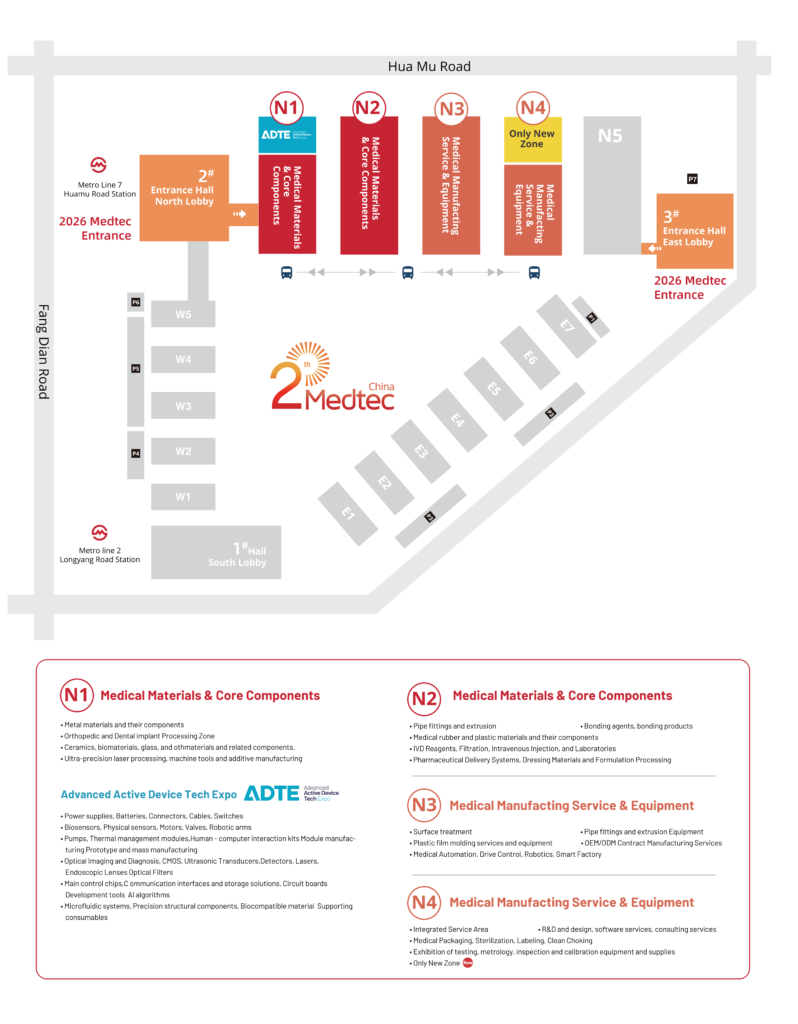
Deploying the architecture above reduces audit friction and shortens root-cause cycles. The practical payoff is measurable: fewer CAPAs, faster release cycles, and demonstrable ISO 13485 evidence at inspection — and that’s why teams show up at events like Medtec China to compare approaches and validate tooling choices.
Final thought — make the system do the policing, not the people. — Medtec